
Deep Plane Facelift vs. Traditional Facelift in Pittsburgh: Which Gets Better Results?
Neither the deep plane facelift nor the traditional facelift is automatically the better choice. The right option for your facelift in Pittsburgh depends on your facial anatomy, your age, how your face has changed over time, and the result you want to see. A deep plane facelift releases and repositions the deeper layers of the face for natural, long-lasting rejuvenation. In contrast, a traditional facelift lifts the skin and the support layer just beneath it with reliable, time-tested results.
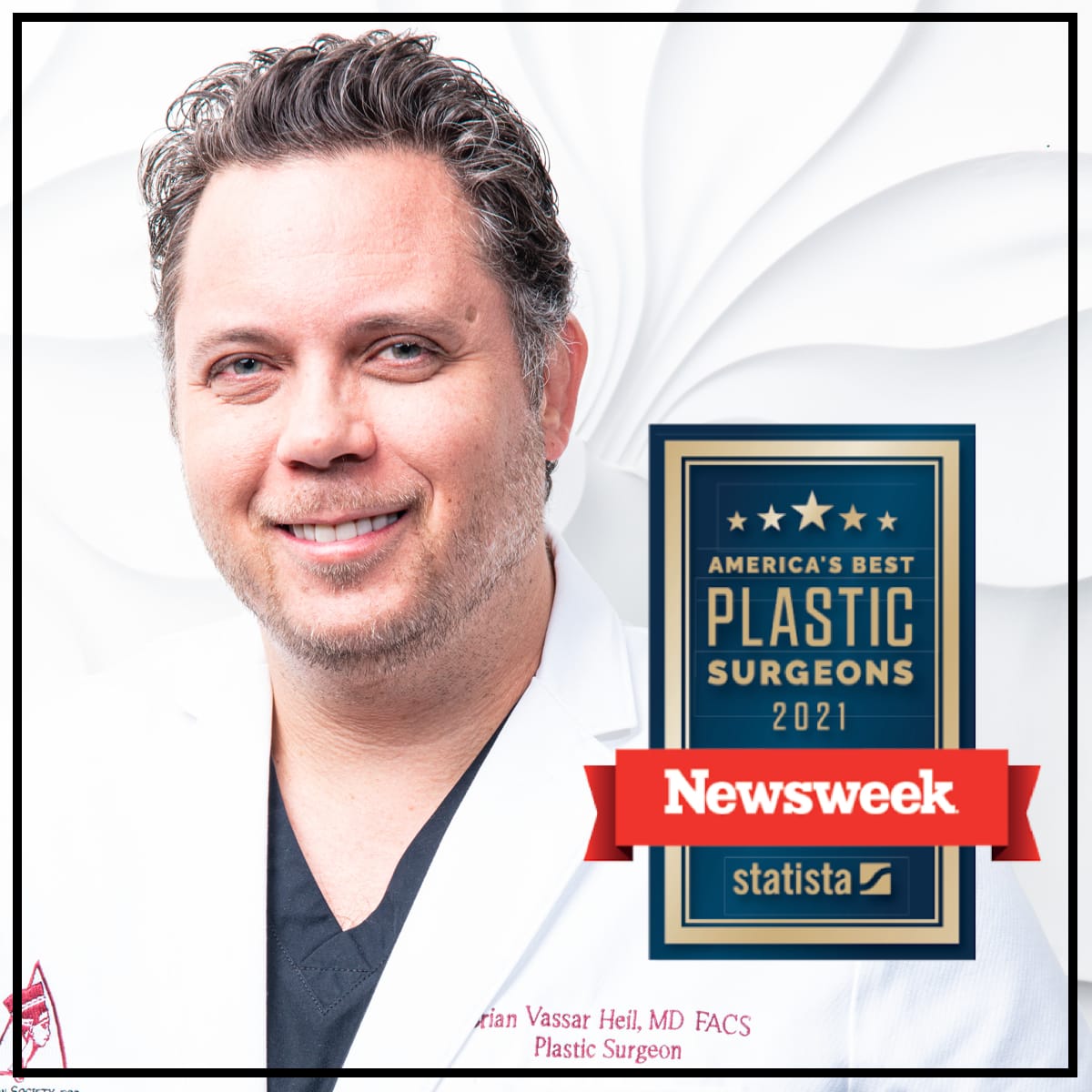
At Premier Plastic Surgery, board-certified plastic surgeon Dr. Brian V. Heil and aesthetic fellowship-trained Dr. Xiao Zhu, who specializes in deep plane face and neck lifts, perform both techniques and tailor the approach to each individual. In this blog, they explain how the two procedures differ, who each one suits, and what truly drives a beautiful, natural outcome.
At a Glance: Deep Plane vs. Traditional Facelift
- Depth of the lift: A traditional facelift tightens the skin and the SMAS (the muscle and tissue layer beneath the skin). A deep plane facelift works beneath that layer, releasing the ligaments that anchor the face.
- How tissue is handled: A traditional facelift repositions the SMAS and trims excess skin. A deep plane facelift lifts the skin, muscle, and fat together as a single unit.
- Naturalness: Both can look natural in skilled hands. The deep plane technique avoids tension on the skin, which helps prevent a pulled or overdone appearance.
- Longevity: Because it repositions deeper structures, the deep plane facelift often lasts longer.
- Recovery: A deep plane facelift typically involves more initial swelling and a slightly longer recovery than a traditional facelift.
What Is a Traditional Facelift?
A traditional facelift, known medically as a rhytidectomy, is a surgical procedure that improves visible signs of aging in the face and neck. It addresses sagging skin, deep folds between the nose and mouth, and loss of definition along the jawline.
During surgery, Dr. Heil or Dr. Zhu makes incisions that:
- Begin in the hairline near the temple
- Continue around the ear
- End in the lower scalp
Your surgeon then tightens the SMAS layer, repositions the underlying tissue, and removes excess skin.
This approach has been refined over decades and remains a dependable, versatile option. It works especially well for patients with moderate jowling and skin laxity who want meaningful improvement with a well-established technique.
What Is a Deep Plane Facelift?
A deep plane facelift goes one layer deeper than a traditional facelift. Rather than tightening the SMAS from above, the surgeon releases the retaining ligaments that hold the face in place and lifts the skin, muscle, and fat as a single, cohesive unit.
Because the tissue is repositioned rather than pulled tight, a deep plane facelift can restore volume to the midface and refine the jawline and neck while avoiding a stretched look. This makes it particularly effective for patients with deeper midface descent and more advanced soft-tissue laxity.
Key Differences Between Deep Plane and Traditional Facelifts in Pittsburgh
The central difference between these two facelift techniques is the depth at which the surgeon works and how the facial tissue is moved.
| Feature | Traditional (SMAS) Facelift | Deep Plane Facelift |
|---|---|---|
| Surgical depth | Skin and SMAS layer | Beneath the SMAS, with ligament release |
| Tissue movement | SMAS tightened, skin trimmed | Skin, muscle, and fat lifted as one unit |
| Best for | Moderate jowling and skin laxity | Midface volume loss and deeper laxity |
| Midface and neck | Good improvement | Comprehensive lift of midface, jawline, and neck |
| Longevity | Long-lasting | Often longer-lasting |
| Recovery | Generally shorter | Slightly longer, more initial swelling |
So, Which Facelift Gets Better Results?
The honest answer is that the better facelift is the one matched correctly to your face:
- A deep plane facelift can deliver more comprehensive, longer-lasting rejuvenation for the right candidate, but it is not the superior choice for everyone
- A traditional facelift remains an excellent option and may be the smarter, more efficient procedure for patients whose aging is concentrated in the lower face and jawline
What matters most is not the label of the technique but the judgment and skill behind it. Three factors consistently shape a great result:
- Surgeon experience: Deep plane surgery requires advanced training and precise dissection near important facial nerves.
- Technique matched to anatomy: The best outcome comes from selecting the approach that fits your tissue, bone structure, and goals.
- A natural results philosophy: Both Dr. Heil and Dr. Zhu focus on enhancing your features rather than changing your identity.
Deep Plane vs. Traditional: Which Facelift is Right For You? We’re Here to Help You Decide.
Premier Plastic Surgery pairs deep technical expertise with a setting built for safety and comfort. Founded by Dr. Brian V. Heil in 2001, the practice has grown into one of the largest plastic surgery practices in Western Pennsylvania, with facial rejuvenation central to its work from the start.
Our patients benefit from:
- Dual surgical expertise: Dr. Heil is certified by the American Board of Plastic Surgery and is a Fellow of the American College of Surgeons, with more than two decades of experience. Dr. Zhu completed an integrated plastic surgery residency at UPMC, followed by a dedicated aesthetic fellowship in Beverly Hills, where he trained extensively in deep plane face and neck lifts.
- A focus on natural results: Both surgeons are known for refined, natural-looking outcomes, a reputation reflected in their patient reviews.
- An accredited, on-site surgery center: Procedures are performed at the practice’s private surgery center in Wexford, which is accredited by the American Association for Accreditation of Ambulatory Surgery Facilities (AAAASF) and staffed by a board-certified anesthesiologist.
For patients across the Pittsburgh area, this combination means your facelift is planned and performed by surgeons who do this work every day, in a facility held to hospital-grade standards. To find out which approach will give you the best result, schedule a consultation with Dr. Heil or Dr. Zhu today.
Disclaimer: This information is provided for educational purposes only and does not replace a consultation with a board-certified plastic surgeon. Outcomes, risks, and suitability vary from patient to patient.
Sources
- American Society of Plastic Surgeons, Facelift Overview: https://www.plasticsurgery.org/cosmetic-procedures/facelift
- American Society of Plastic Surgeons, Facelift Procedure Steps: https://www.plasticsurgery.org/cosmetic-procedures/facelift/procedure
- American Society of Plastic Surgeons, Facelift Risks and Safety: https://www.plasticsurgery.org/cosmetic-procedures/facelift/safety
- American Society of Plastic Surgeons, Facelift Cost: https://www.plasticsurgery.org/cosmetic-procedures/facelift/cost
- StatPearls, National Institutes of Health, Cervicofacial Rhytidectomy: https://www.ncbi.nlm.nih.gov/books/NBK564338/
- American Board of Plastic Surgery: https://www.abplasticsurgery.org/